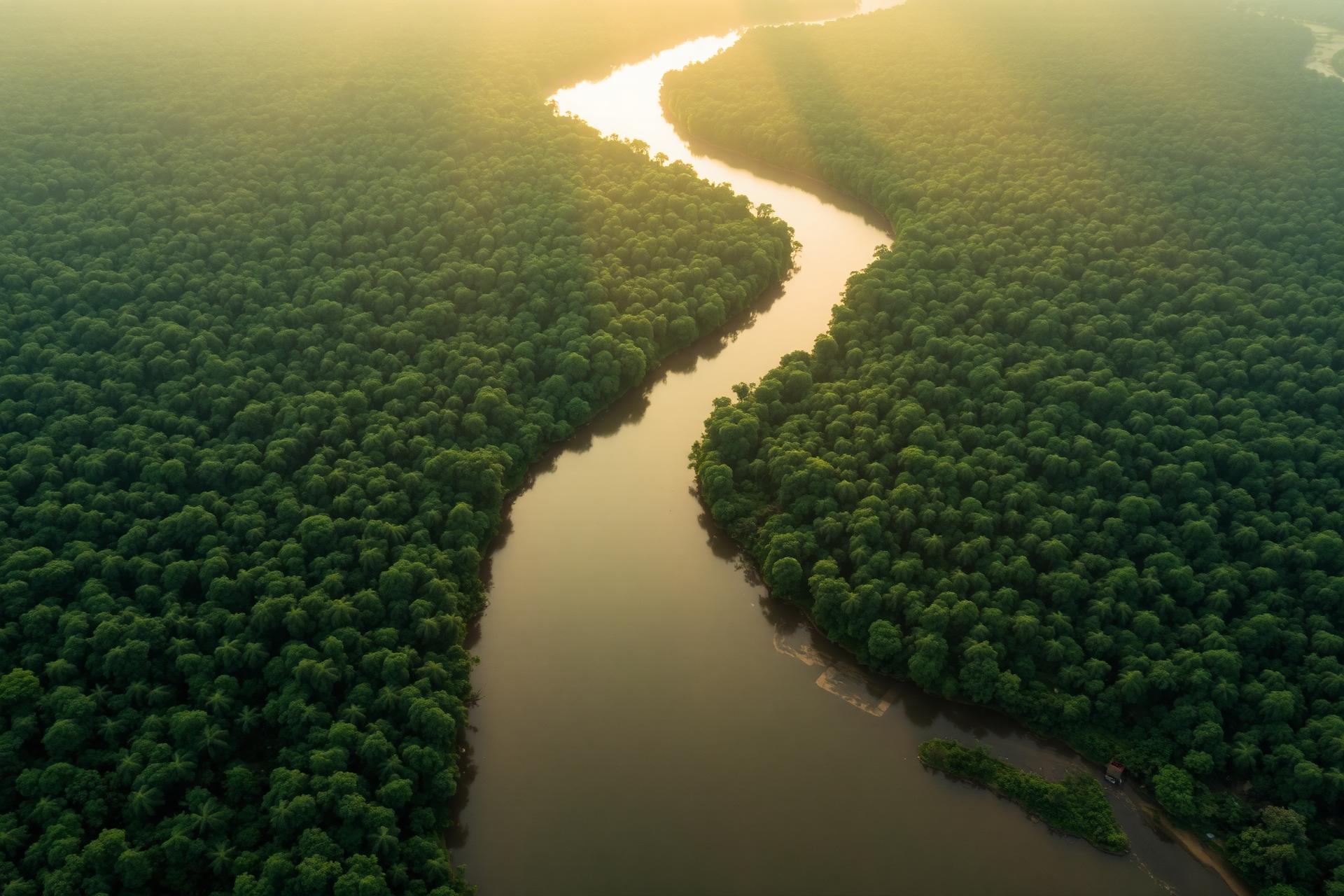
Aerial view of a river winding through the Amazon rainforest at golden hour
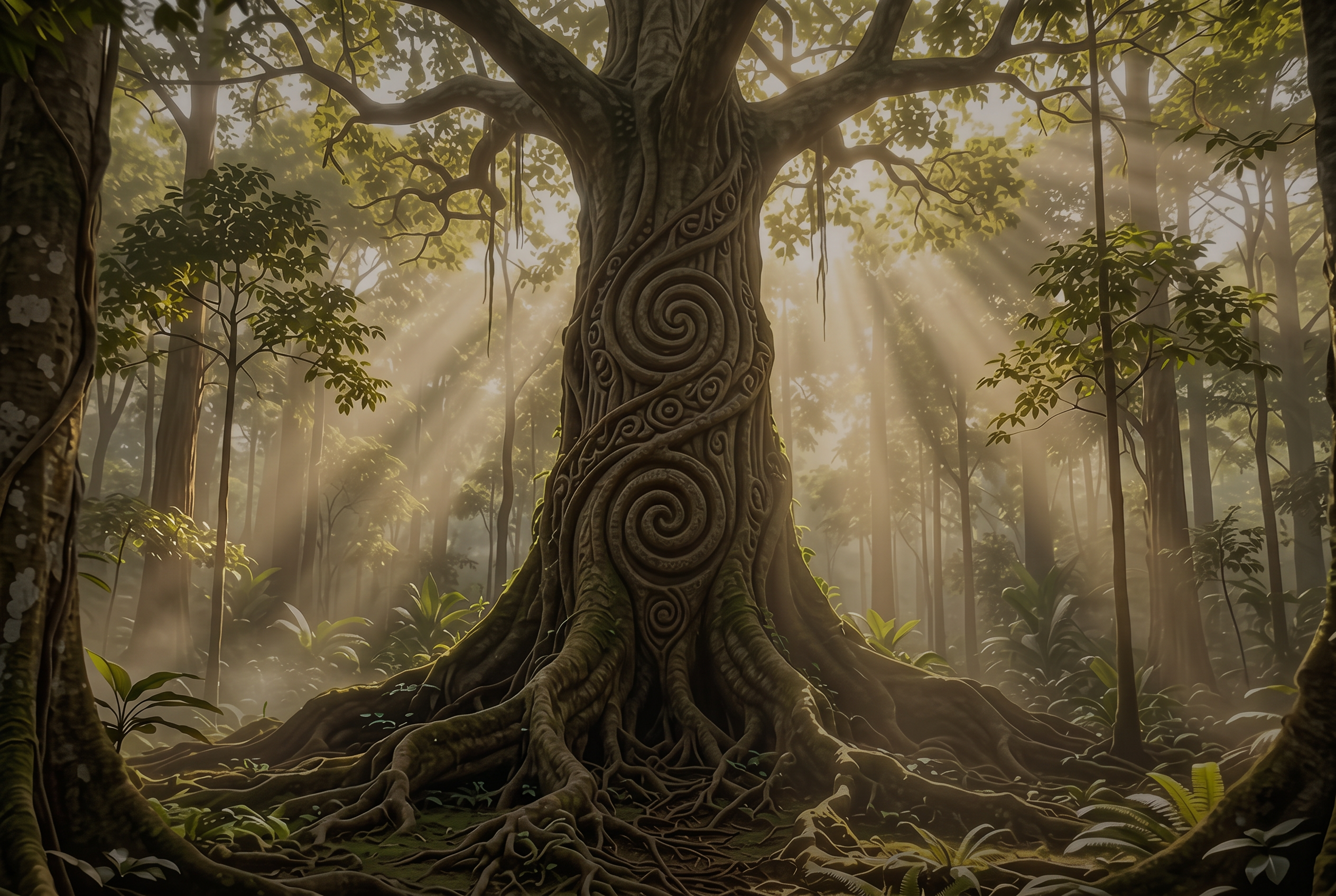
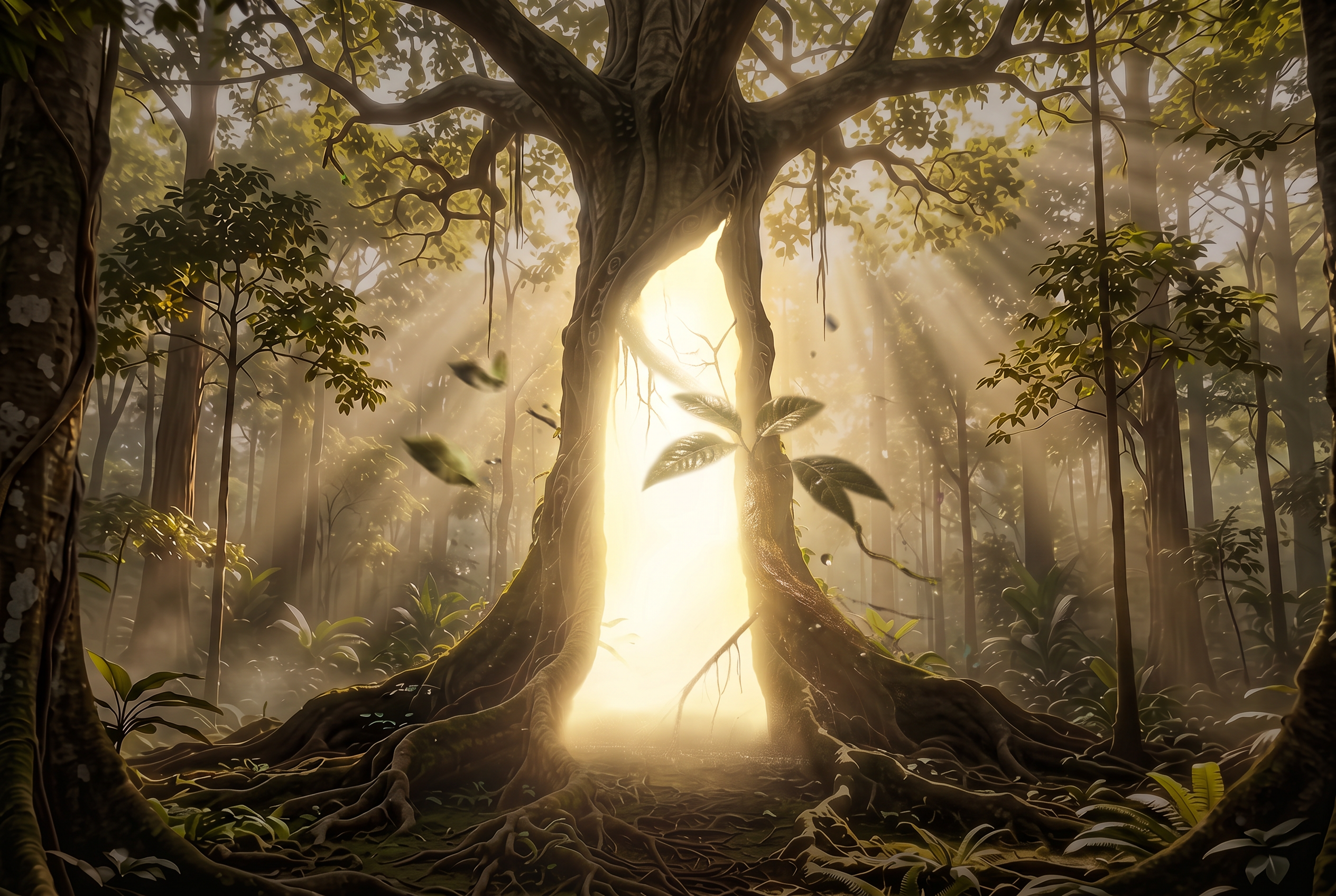
The carved mother tree opening into a luminous inner world

Over eight days at Chakaruna 11:11, in Ecuador's cloud forest, what we have watched, again and again, is not relaxation. It is people remembering, often for the first time in years, what they feel like underneath everything they do.

His chant moves through the dark long after the words end. Picture the version of you that checks the time before it checks the room. Now picture four in the morning with no alarm, feet on wet stone before the fog has decided whether to lift, a silence that doesn't need filling with your next move. Somewhere in the days that follow, your face stops performing. You laugh at something too small to matter. You cry, not because something broke, but because something finally softened. You sleep the way you slept before any of this began. Weeks later, back in a room that wants something from you, you feel the old pull to perform start to rise again, and this time, you're the one who catches yourself before you go under.

That's what it means to expect to self-rescue.

Uni, Kambô, Rapé, the sacred Saiti chants, Shanipahu, Kenê. Few of his generation remain who still hold it this way.

The Yawanawá People

Memory carried by river, dream, song, and living lineage.

The Yawanawá originate from Acre, Brazil, on the border with Peru, in the heart of the Amazon rainforest. Today their population numbers roughly 1,800 people across seventeen villages along the Gregório River. Their way of life, social order, and spirituality are inseparable from their relationship to the world of dreams, a space of knowledge through which their pajés, healers and spiritual guides, have received the chants, rituals, and wisdom passed down since the origins of their people.

Like many Amazonian peoples, the Yawanawá endured decades of disruption under the rubber economy before reclaiming their territory and reviving their ceremonial life. Among the last great pajés of the generation before this revival were Yawarani and Tata, who each lived more than a hundred years. Today, Tima Shawãhu, known as Vovô João, Yawarani's younger brother, is the oldest guardian of this knowledge, a living library of the Yawanawá worldview, carrying teachings from elders who had little contact with the Western world.

It is this same knowledge, held until now almost entirely within the Yawanawá territory, that Vovô João, Panany, and Txana Pexa are bringing to Ecuador this October.

The Guardians

Coming to Ecuador This October

Vovô João (Tima Shawãhu)

Elder · Oldest mukaia of the Yawanawá

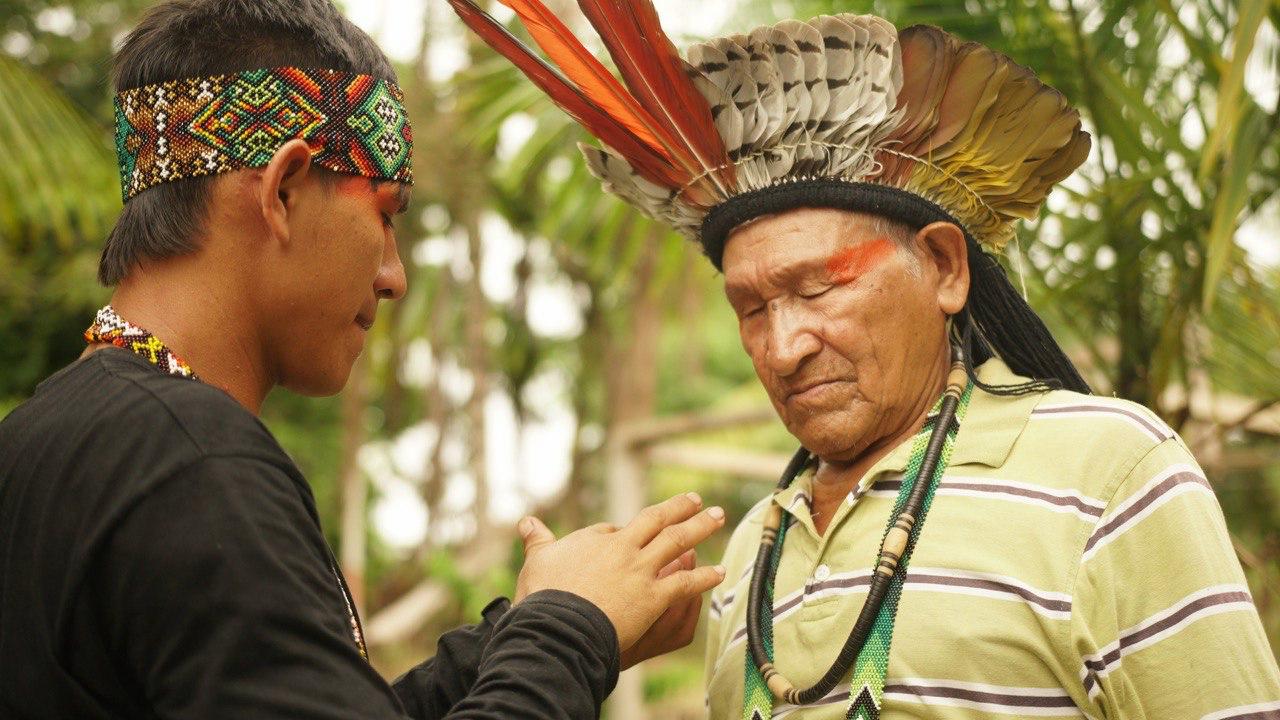
At 93, João is the oldest mukaia of the entire Yawanawá people and younger brother of the legendary pajé Yawarani. He is a living library of his people's memory and cosmovision. After completing the Muka Samakãi, the highest spiritual diet of his tradition, he dedicated his life to studying the medicinal plants of the Amazon, learning to treat both physical and spiritual illness. Today his mission is to preserve ancestral knowledge and the Yawanawá language for younger generations, offering the Vãkuxi blessing and the sacred Saiti chants during ceremony. To receive it from him directly, so late in his life, is a gift very few outside his own people have ever been given.
Facilitators

Sarah Sanchez

Founder of Chakaruna 11:11 · Life & Executive Coach

Sarah spent two decades running a multimillion-dollar corporation before she asked herself the same question this retreat asks every guest: what happens when the achievement stops being enough? An NYU-trained Life and Executive Coach, she built Chakaruna 11:11 in the heart of Ecuador, not as a career pivot, but as the place she needed to exist once she stopped optimizing and started living.

Ceremonies & Medicine

Each practice is held exactly as passed down through Yawanawá lineage, presented here alongside what current research understands about it.

Uni — the Yawanawá's ayahuasca — is prepared from the Banisteriopsis caapi vine and chacruna leaf, following a preparation the Yawanawá have refined across generations. Received here across three ceremonies, Uni is held by Vovô João, Panany, and Txana Pexa together, and accompanied throughout by the Saitis, the sacred chants that open, guide, and close each ceremonial space. For the Yawanawá, Uni is taken not to escape reality but to see it more clearly: a teacher plant through which the forest, the ancestors, and one's own inner world can be met directly.

What research shows

Modern pharmacology confirms much of what Amazonian traditions have long held: Uni's DMT and MAOI-inhibiting beta-carbolines act together to produce a sustained, measurable shift in consciousness. A five-stage process model proposes how this shift unfolds, from altered perception through emotional release to lasting integration, and a naturalistic study following participants for up to a year found sustained improvements in mood, self-efficacy, and spirituality. Interestingly, the most rigorous placebo-controlled research on ceremonial Uni found that overall improvements in mood were felt equally whether participants received Uni or a placebo, suggesting the ceremony itself, the chanting, the held space, the intention, carries much of the weight traditionally attributed to the plant alone. Uni's distinct, measurable contribution in that same study was deepening emotional processing itself: a heightened capacity to feel and metabolize difficult emotion, precisely the terrain the Yawanawá describe Uni as opening.

Held with care: every participant completes a health screening before arrival, covering psychiatric history, cardiac health, and current medication (particularly SSRIs and MAOIs), so the ceremony can be held safely for each person.

An Eight-Day Immersion

Sun, Oct 11

Arrival & Opening of the Path

Landing in the cloud forest, a Bitter Herbal Bath to release the energy of the journey, and a sunset sound healing to open the circle.

The full day-by-day schedule, including ceremony timings, meals, and rest windows, is shared privately with confirmed participants ahead of arrival.

The Retreat Includes

3 traditional Uni ceremonies

Health & Safety

These are traditional medicines with real physiological effects, held here with the same care and screening used throughout Chakaruna's retreats. Kambô is contraindicated for anyone with cardiac, renal, hepatic, or major psychiatric conditions, recent surgery, or pregnancy. Rapé is not advised with uncontrolled hypertension, acute respiratory conditions, recent ENT surgery, or pregnancy. Uni requires screening for psychiatric history, cardiac conditions, and interactions with SSRIs, MAOIs, and other medications.

Applicants must be 18+, complete a health screening prior to arrival, and disclose all medications and medical history. This retreat is not a substitute for medical or psychiatric care.

Walk the Path With Us

Spaces are intentionally limited, so every participant receives the full presence and care of the elders. Tell us how to reach you and when — we contact every applicant within 24 hours.

CHAKARUNA 11:11

EXPECT TO SELF-RESCUE